
I originally posted my latke recipe in 2011, but I’ve continued to tweak it in my own kitchen every year. And now, I have finally achieved what I call The Golden Ratio (potatoes : salt : binders) that produces the best formed and tastiest latkes. A few other tips and techniques make latke production as efficient and reliable as it can be. But if anyone has tricks for eliminating lingering latke smell from a kitchen (or a head of hair), please send them my way!

This recipe makes approximately 18 latkes. A reasonable serving size is 3-4 per person. If you want to double the recipe, I recommend making 2 consecutive batches. If you double the potato mixture up front, it will oxidize and turn black before you’re able to fry it all. And while oxidization doesn’t affect the flavor, it certainly affects appearances, as my sisters love to remind me!

In a large bowl, whisk together 3 egg whites, 2 tablespoons of flour, and 2 teaspoons of salt.
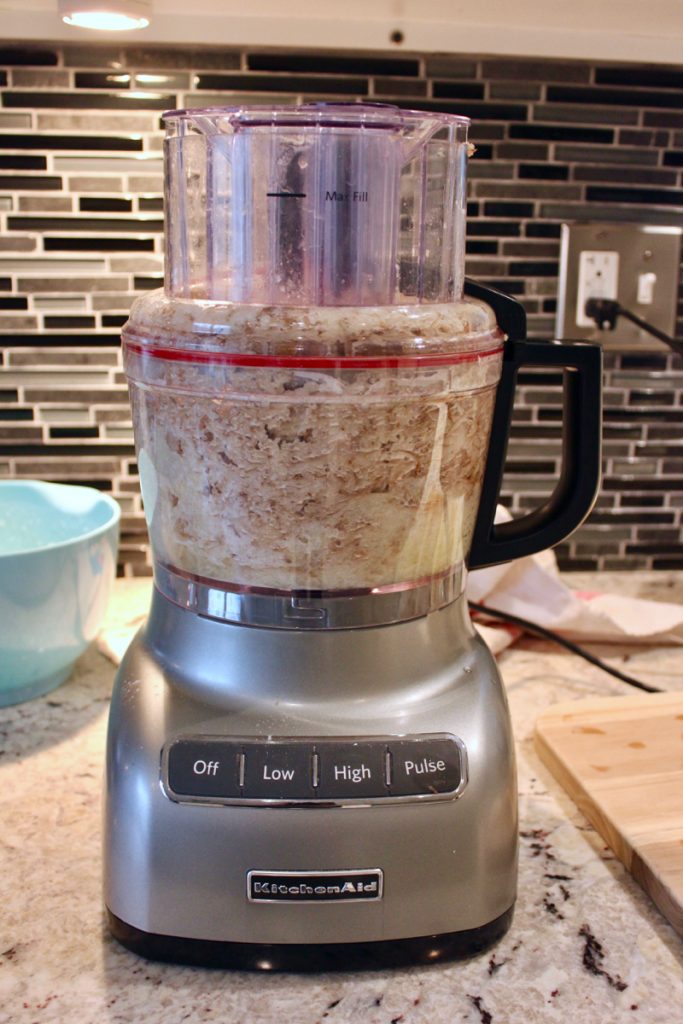
Using the small holes of a box grater or food processor grating attachment, grate 1 yellow or white onion and 3 russet potatoes. I don’t find it necessary to peel the potatoes first. Although most latkes are made using large gratings, I think the smaller ones give a better texture – crisp latkes will first shatter and then melt in the mouth. So satisfying!

This next step is so important – please don’t skip it like I used to. Transfer the gratings to a thin kitchen towel or cheese cloth and squeeze out as much of the liquid as you can. To prevent the potato juices from discoloring your towel, rinse it after wringing.

You don’t have to go crazy, but you’ll be surprised by how much liquid is released. And the less liquid that is in the latkes, the less they will splatter when they’re added to hot oil. And the less they splatter, the cleaner your kitchen!

Dump the gratings into the bowl and mix it all together with your hands. Transfer the mixture to a strainer set over a bowl to catch additional drippings.

Heat about 1 centimeter of vegetable oil in a skillet over medium heat. When a piece of the potato sizzles, it’s ready to go. Also, if you happen to have duck fat or schmaltz around, add a dollop into the vegetable oil for nice flavor. For speed, I recommend frying in two skillets at once. Measure 1/4 cup of the latke mixture, then compress it into a patty with your hands, squeezing out any remaining liquid. Put the patty into the skillet, and keep on going until the skillet is full.

When you see the potato browning on the edges and you have good color, flip the latkes over to cook on the other side. If you’re preparing your latkes in advance, I recommend cooking them to a lighter color than you’d otherwise want, like I did here. It gives you flexibility to heat them to a golden crisp in the oven later without burning them.

When cooked, I like to transfer the latkes to a cooling rack set over paper towels. The air circulation helps keep them crisp. But you could also put them straight onto paper towels. If you’re making a second batch, skim any burning bits out of the oil. Also feel free to add more oil, if it starts to run low.
Serve your latkes with a side of high-quality apple sauce.
Shopping list:
- Russet potatoes – 3
- Onion – 1
- Eggs – 3
- Flour – 2 tablespoons
- Salt – 2 teaspoons
- Vegetable oil


I like the idea of focusing on the right proportions to get latkes that hold together well while still turning out crisp and flavorful. The tip about squeezing excess moisture from the grated potatoes and onions is especially useful for achieving a better texture and reducing oil splatter. Serving them with good-quality applesauce sounds like a perfect finishing touch, too. Recipes like this show how small details can make a big difference in the kitchen. Exploring different dishes and restaurant menu inspiration can also help people discover new flavors and ideas for their own meals.
The golden ratio idea is what got me. I have tried so many latke recipes and they always come out either too soft or too greasy. Squeezing out every bit of liquid first makes total sense now. I am going to try the small grater trick next time I fry a batch. Thanks for sharing the tweaks you made over the years, that part helped the most.
The potato-to-salt-to-binder “Golden Ratio” sounds like a wonderfully practical way to get consistently crisp, well-formed latkes. I’m also curious whether anyone has found a reliable trick for banishing that lingering fried-potato smell from hair and kitchen curtains.